Why Your Gums Need a Specialist (And When to Make the Call)
Ever wondered why your dentist suddenly wants to “refer you to a specialist” when your gums start acting up? Here’s the truth: not all dental problems are created equal, and neither are the doctors who treat them.
Picture this: You wouldn’t ask your family doctor to perform heart surgery, right? The same logic applies to your mouth. While your general dentist is fantastic at keeping your overall oral health in check, there are times when your gums need someone with specialized training – a periodontist.
Let me break this down for you in simple terms, because understanding the difference could literally save your teeth.

What Exactly Is a General Dentist?
Think of your general dentist as your oral health’s “primary care physician.” They’re the first line of defense against dental problems and handle a wide range of services:
- Routine cleanings and checkups (those twice-yearly visits you hopefully don’t skip)
- Cavity fillings when you’ve had one too many late-night snack attacks
- Crowns and bridges to restore damaged teeth
- Root canals for infected teeth
- Basic gum disease treatment in its early stages
- Preventive care like fluoride treatments and sealants
Your general dentist went to dental school for four years and earned either a Doctor of Dental Surgery (DDS) or Doctor of Dental Medicine (DMD) degree. They’re well-trained to handle most dental issues you’ll encounter in your lifetime.
But here’s where it gets interesting…

You need a periodontist when:
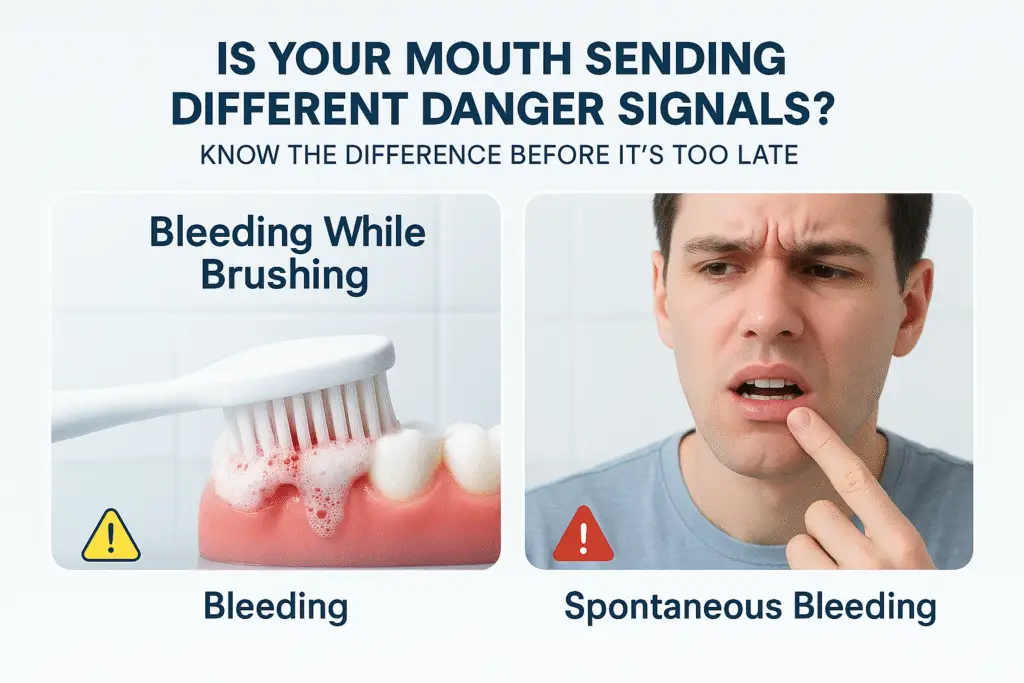
- Your gums bleed regularly (and we’re not talking about that one time you flossed too hard)
- You have persistent bad breath that won’t go away
- Your gums are pulling away from your teeth
- You have loose teeth or notice gaps appearing
- You need dental implants
- Your general dentist refers you for specialized gum treatment
The Real Talk About Gum Disease
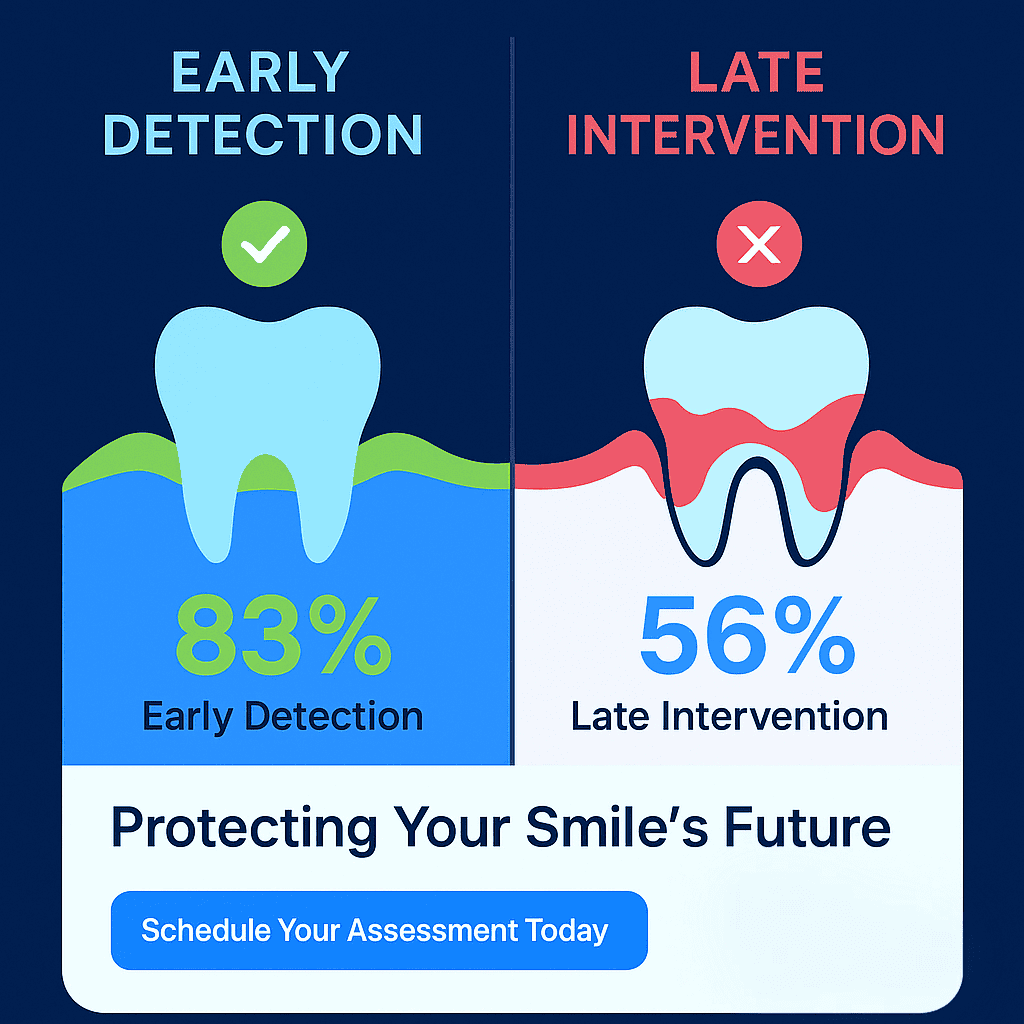
Here’s something that might surprise you: nearly half of adults over 30 have some form of gum disease. Yet most people don’t even know it because early gum disease often doesn’t hurt.
Your general dentist can handle mild gum inflammation (gingivitis) with professional cleanings and improved home care. But once gum disease progresses to periodontitis – where you start losing the bone that supports your teeth – you need specialized care.
This is where the periodontist’s extra training becomes crucial. They have advanced techniques and tools that can:
- Stop the progression of gum disease
- Regenerate lost bone and tissue
- Save teeth that might otherwise be lost
- Place implants to replace missing teeth
- The Technology Difference
Periodontists often have access to cutting-edge technology that general dentists might not use regularly:
- Laser therapy for minimally invasive gum treatment

- 3D imaging for precise implant placement
- Regenerative materials to rebuild lost bone and tissue
- Microsurgical techniques for better outcomes and faster healing
- Working Together for Your Health
Here’s the beautiful thing: general dentists and periodontists work as a team. Your general dentist knows when to call in the specialist, and the periodontist will send you back to your general dentist for ongoing care once your gum issues are under control.
It’s not about one being “better” than the other – it’s about having the right specialist for the right job.
The Bottom Line
Your mouth is connected to your overall health in ways we’re still discovering. Gum disease has been linked to heart disease, diabetes, and even pregnancy complications. When your general dentist suggests seeing a periodontist, they’re not trying to get rid of you – they’re ensuring you get the specialized care your gums need.
Don’t wait until it’s too late. If you’re experiencing any signs of gum problems, start with your general dentist. They’ll guide you to the right specialist if needed.
Remember: catching gum disease early can mean the difference between a simple cleaning and complex surgery. Your future self (and your wallet) will thank you for taking action now.