
When Your Tooth Breaks: The Critical Choice
A fractured tooth can turn your day upside down in an instant. Whether it’s from biting down on something hard, a sports injury, or simply the result of years of wear and tear, that sharp pain and visible crack immediately raises urgent questions: Can this tooth be saved? Should I try to repair it, or is it time for a dental implant?
This decision isn’t just about immediate comfort—it’s about your long-term oral health, functionality, and financial investment. Understanding the factors that influence this choice can help you make an informed decision that protects both your smile and your overall well-being.
Understanding Tooth Fractures: Not All Breaks Are Equal

Tooth fractures exist on a spectrum of severity, and the type of fracture significantly influences your treatment options. Minor chips in the enamel might require nothing more than cosmetic bonding, while deep cracks extending into the tooth’s root often necessitate extraction and replacement.
Craze lines are superficial cracks that only affect the outer enamel and typically don’t require treatment beyond monitoring. Fractured cusps involve the pointed chewing surfaces but usually don’t affect the tooth’s nerve, making them good candidates for crowns or large fillings.
More serious fractures include split teeth, where the crack extends from the surface down through the root, and vertical root fractures, which often go undetected until infection develops. These severe fractures frequently require extraction, making implant placement the preferred long-term solution.
When Repair Makes Sense: Saving Your Natural Tooth
Your natural tooth, when salvageable, offers advantages that no artificial replacement can fully replicate. Natural teeth provide proprioceptive feedback—the ability to sense pressure and texture—that helps you chew efficiently and protects you from biting too hard.
Dental crowns represent the most common repair option for significantly fractured teeth. When enough healthy tooth structure remains above the gum line, a crown can restore both function and appearance while preserving the natural root. This approach maintains the periodontal ligament, which continues to provide crucial support and sensory feedback.
Root canal therapy combined with crown placement can save teeth with fractures extending into the pulp. While this removes the tooth’s nerve, it preserves the root structure and surrounding bone, maintaining your jaw’s natural architecture.
The repair approach typically involves less initial cost and shorter treatment time. Most importantly, it preserves your natural tooth structure, which should always be the first consideration when possible.
The Case for Dental Implants: When Replacement Is Superior
Sometimes, attempting to save a severely fractured tooth becomes a costly exercise in futility. Teeth with extensive damage, particularly those with vertical root fractures or fractures extending well below the gum line, often have poor long-term prognoses even after repair attempts.

Dental implants offer several compelling advantages in these situations. They provide superior long-term durability, often lasting decades with proper care. Unlike repaired natural teeth, implants aren’t susceptible to decay, though they do require diligent care to prevent peri-implantitis—a condition similar to gum disease that affects the tissues around implants.
From a periodontal health perspective, implants can actually be preferable when the alternative is keeping a compromised tooth that might harbor bacteria or require repeated treatments. A failing tooth can become a source of chronic infection, potentially affecting surrounding teeth and overall oral health.
Implants also provide excellent bone preservation. When a tooth is extracted, the surrounding bone begins to resorb without the stimulation provided by the tooth root. Dental implants provide this crucial stimulation, maintaining bone density and facial structure over time.
Critical Factors in Your Decision

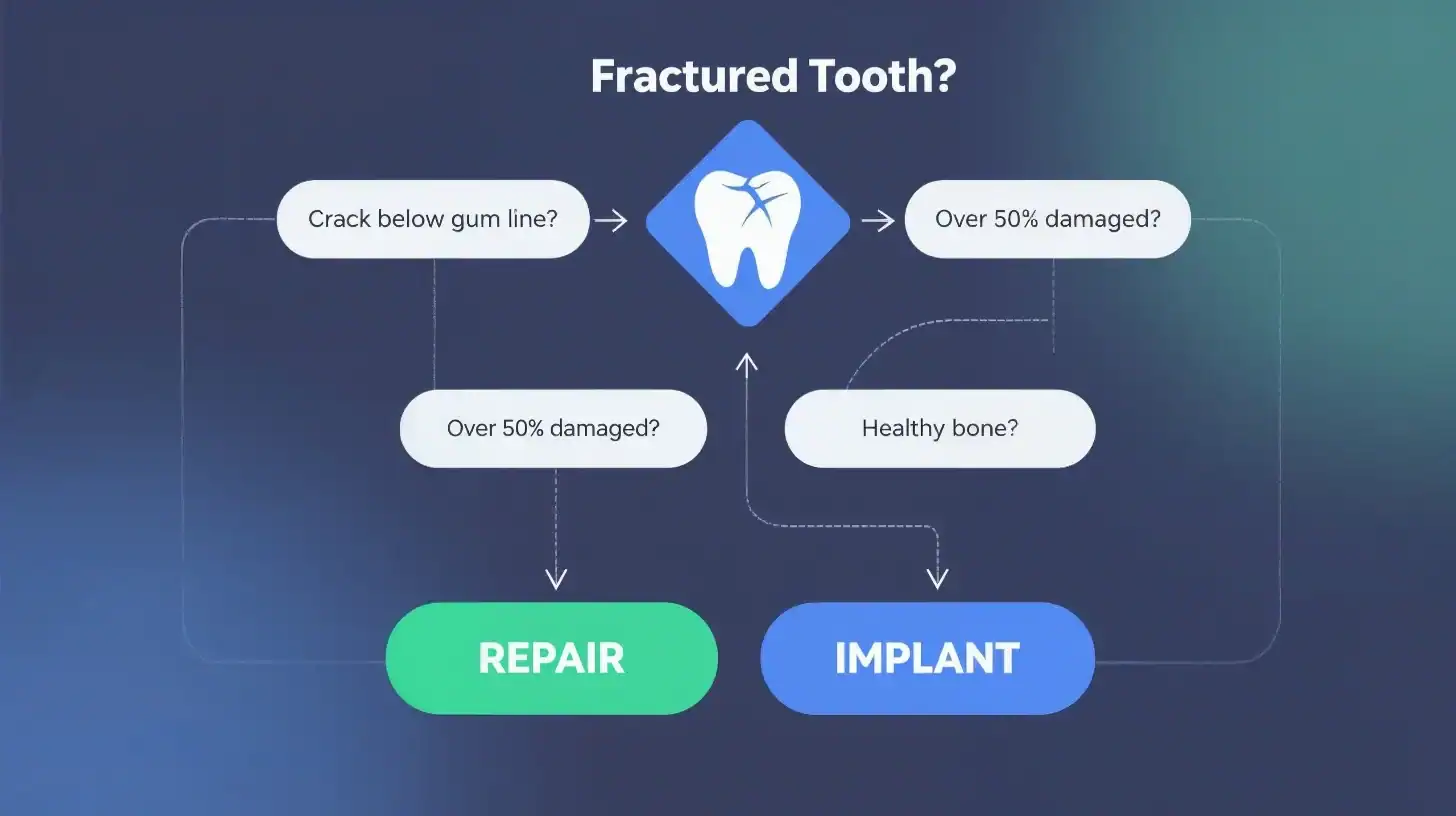
Extent of damage remains the primary consideration. If more than 50% of the tooth structure is compromised, or if the fracture extends significantly below the gum line, extraction and implant placement often provide better long-term outcomes.
Your age and overall health play important roles. Younger patients might benefit more from attempting repair, as they have decades ahead to potentially deal with complications. However, older patients might prefer the predictability of an implant over multiple procedures to maintain a compromised tooth.
Bone quality and quantity affect implant success. If you have sufficient bone density and volume, implants typically integrate well. However, if bone grafting would be required, this adds complexity and cost to the implant option.
Financial considerations extend beyond initial treatment costs. While implants typically cost more upfront, a tooth requiring multiple repairs over time might ultimately prove more expensive. Consider both immediate costs and long-term maintenance when making your decision.
The Periodontal Connection: Why Gum Health Matters
Your periodontal health significantly influences both treatment options. Healthy gums and supporting bone structures improve success rates for both repairs and implants. If you have existing gum disease, addressing this condition before major restorative work becomes crucial.
Fractured teeth can sometimes result from underlying periodontal problems that have weakened the tooth’s support structure. In these cases, treating the periodontal condition might be necessary regardless of whether you choose repair or replacement.
Making Your Decision: Partner with Dr. Gums
The choice between repairing and replacing a fractured tooth requires careful evaluation of multiple factors. Your dentist and periodontist can assess the fracture’s extent, your overall oral health, and your personal circumstances to recommend the most appropriate treatment.
Remember that this decision affects not just the fractured tooth, but your entire oral health ecosystem. Choose the option that provides the best long-term outcome for your smile, your function, and your overall well-being.