🦷 You Know Your Mouth. And Something Is Different.
You can’t quite explain it — but something has shifted. That instinct is worth paying attention to.
It’s not dramatic. There’s no emergency. But something is different in your mouth, and you’ve noticed it. Maybe it’s been a few days. Maybe longer. You keep checking, keep running your tongue over the same spot, keep wondering if you’re imagining it.
You’re not imagining it.
What You Might Be Feeling
This kind of uncertainty has its own particular discomfort. It’s not the sharp urgency of acute pain — it’s the low hum of something being off that you can’t quite name.
“One of my teeth feels different when I bite down.”
“My gums look different than they used to — or maybe they feel different.”
“There’s a spot that’s sensitive now that wasn’t before.”
“I keep checking it but I don’t know what I’m looking for.”
“I don’t want to make a big deal out of nothing — but what if it’s not nothing?”
That last thought is the one that keeps coming back, isn’t it?
The challenge with changes that don’t come with obvious pain is that they’re easy to rationalize away. You tell yourself it’s probably fine. You wait to see if it resolves. You mention it to a partner or friend who says “I’m sure it’s nothing.” And so you wait a little longer.
But the fact that you noticed — and that you’re still thinking about it — means something. Your body is communicating with you in a quieter register. That’s worth listening to.

What Could Be Happening
Changes in the mouth that don’t come with obvious pain can still be meaningful. Some of the most common causes include:
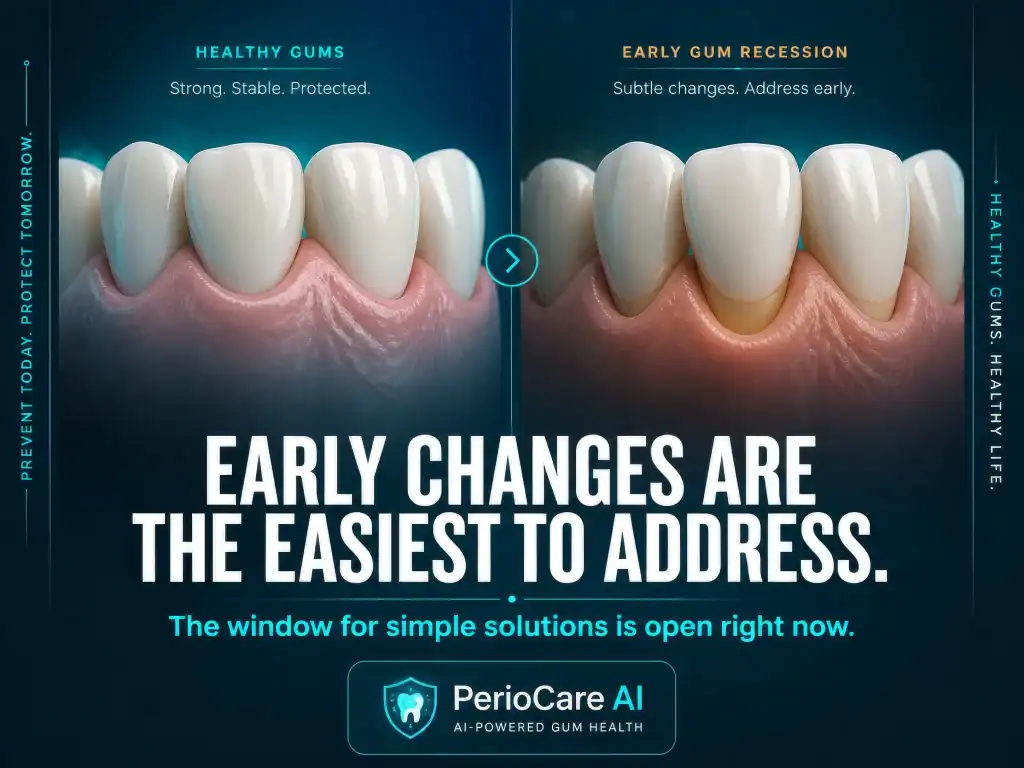
- Early gum recession — the gumline pulling back slightly, exposing more of the tooth root, creating new sensitivity
- A tooth beginning to shift — subtle movement that changes how your bite feels
- A hairline crack in a tooth — not always painful at first, but noticeable when biting in certain ways
- Early bone loss — often silent in the beginning, but detectable through changes in how teeth feel or fit together
- A restoration beginning to fail — an old filling or crown that is starting to separate from the tooth beneath it
What these have in common is that they are all easier to address in the early stages than later. The change you’re noticing now is often the window — the moment when intervention is simplest, least invasive, and least expensive.
Waiting for it to become painful is not a strategy. It’s a gamble.
Why People Wait (And Why It Matters)
When something changes but doesn’t hurt, the temptation to wait is almost universal. And it’s completely understandable.
“I don’t want to go in and be told I need thousands of dollars of work.”
“What if they make me feel bad for not coming in sooner?”
“It’s probably nothing. I’ll keep an eye on it.”
These thoughts are normal. But they’re also the thoughts that, over time, turn manageable situations into complex ones.
Here’s what dental professionals consistently observe: the patients who come in early — when something just feels different — almost always have more options, simpler treatment paths, and lower costs than those who wait until the pain becomes undeniable.
Early intervention is not about being alarmist. It’s about being smart. It’s about catching something at the moment when your body is giving you the clearest signal that something needs attention — before that signal has to get louder to be heard.
The embarrassment concern is also worth addressing directly: no good dental provider judges you for coming in. They’re glad you came. The patients who are hardest to help are the ones who waited until there were no easy options left.

What Most People Do Next
When people come in with a vague sense that something has changed, they often discover one of two things: either it’s something minor that can be monitored or addressed simply, or it’s the early stage of something that — caught now — has a very clear and manageable solution.
In cases where a tooth is compromised or where bone loss is beginning, dental implants sometimes enter the conversation — not as an immediate necessity, but as part of understanding the full picture of what’s possible.
Knowing that a permanent, stable solution exists — one that looks and functions like a natural tooth — changes how people feel about the path ahead. It removes the fear that losing a tooth means losing your smile or your quality of life.
Understanding your options early gives you power. It means you’re making decisions from a place of knowledge, not desperation.
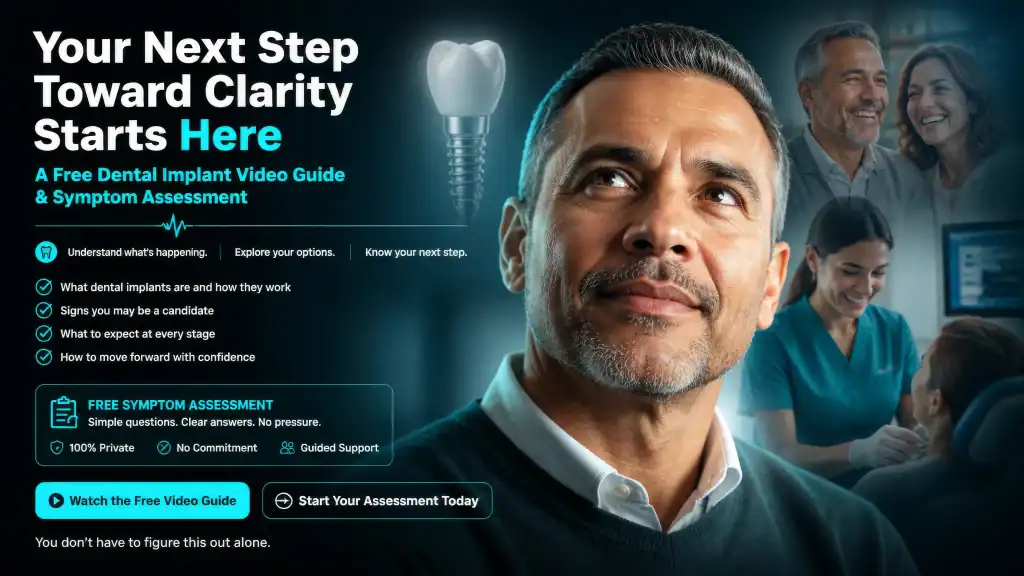
If you’ve been quietly noticing something different in your mouth and wondering whether it’s worth paying attention to — it is.
Not because it’s definitely serious. But because you deserve to know. You deserve clarity instead of quiet worry. You deserve to understand what’s happening in your own body.
This isn’t about committing to treatment. It’s not about signing anything or spending anything. It’s simply about getting information — from people who are genuinely here to help you understand, not to sell you something.
One conversation can replace weeks of wondering.
That quiet instinct that something is different? It’s worth a conversation.
📞 Call us today — tell us what you’ve noticed, and our CarePath team will help you understand what it might mean.
📅 Book A Symptom Assessment — a calm, no-pressure assessment where you get real answers about what’s happening.