
That Sensitivity You Keep Noticing? It’s Worth Understanding.
Gum sensitivity that’s becoming a daily distraction is your mouth’s way of asking you to pay closer attention.
It started as something minor. A little tenderness when you brush. Maybe some discomfort when you eat something crunchy or acidic. You told yourself it was probably nothing — maybe you brushed too hard, maybe it’s just a phase. But it keeps coming back. And now it’s starting to bother you in a way that’s hard to ignore.
That persistent sensitivity is worth paying attention to. Not because it means something catastrophic — but because it’s often one of the earliest, most actionable signals your gum tissue sends before things progress further.
What You Might Be Noticing
The sensitivity might show up in specific spots — one or two teeth that feel more reactive than the others. Or it might be a general tenderness along the gum line that flares up when you brush, floss, or eat certain foods.
You might notice that your gums look slightly different in those areas. Maybe a little redder. Maybe the gum line looks like it’s sitting slightly lower than it used to. You might have caught yourself looking more carefully in the mirror lately — tilting your head, trying to figure out if something has changed or if you’re imagining it.
You’re probably not imagining it.
Some people describe this stage as a low-level awareness that something is shifting. It’s not painful enough to feel urgent, but it’s consistent enough to be distracting. That’s actually a meaningful window — a moment where understanding what’s happening can make a real difference in what comes next.

What Could Be Happening
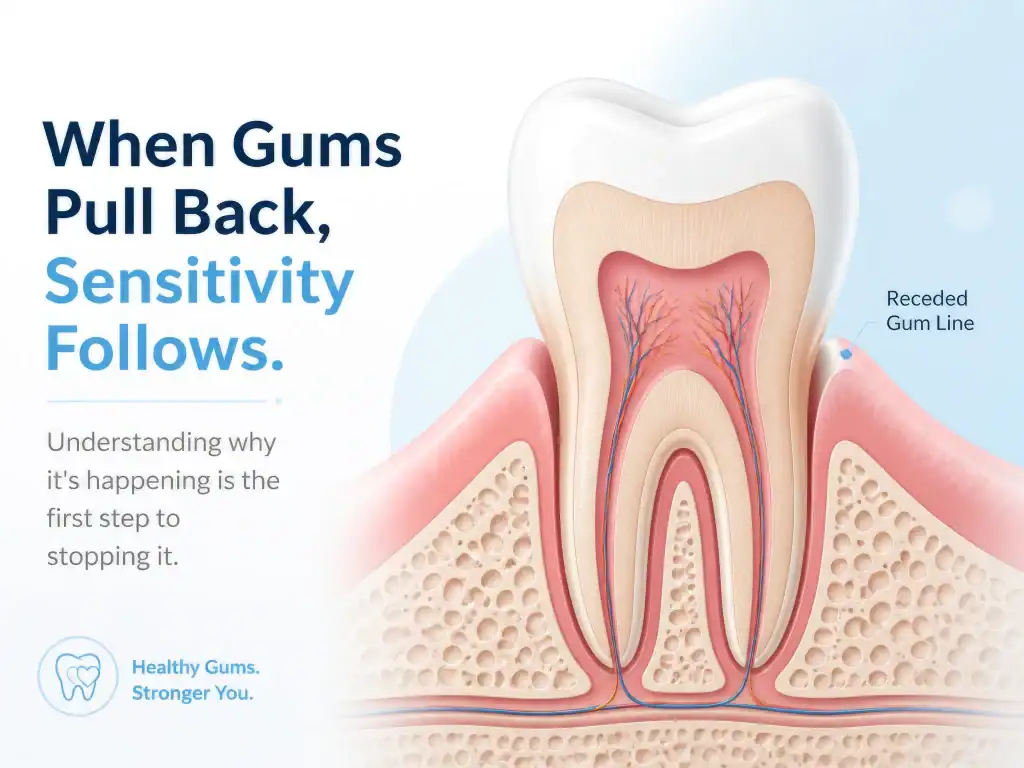
Gum sensitivity at this stage often points to early gum recession or the beginning of gum inflammation. When the gum tissue starts to pull back — even slightly — it exposes the root surface of the tooth, which is significantly more sensitive than the enamel-covered crown.
This can happen for several reasons. Brushing too aggressively over time is one of the most common causes — the gum tissue is delicate, and repeated friction can gradually wear it down. Gum disease, even in its early stages, can cause the tissue to become inflamed and begin to recede. Genetics also play a role — some people simply have thinner gum tissue that is more prone to recession.
The sensitivity you’re feeling is often the root surface reacting to temperature, pressure, or acidity. It’s not damage to the tooth itself — it’s the tissue around it signaling that it needs support.
Why People Wait (And Why It Matters)
Gum sensitivity at this level is easy to rationalize away. It’s not debilitating. It doesn’t stop you from eating or going about your day. So most people file it under “something to deal with eventually” and move on.
The challenge is that gum recession, once it begins, tends to progress gradually. The tissue doesn’t grow back on its own. What starts as mild sensitivity and a slightly lower gum line can, over months or years, become more significant recession — with more root exposure, more sensitivity, and a more involved treatment process.
Catching this early doesn’t mean you’re committing to anything dramatic. It means you’re giving yourself the most options — and the simplest path forward.

What Most People Do Next
When gum sensitivity is caught at this stage, the options are often straightforward and minimally invasive. A periodontal assessment can identify exactly where recession is occurring and how significant it is. From there, the approach might be as simple as adjusting your brushing technique and using a sensitivity-specific toothpaste — or it might involve a soft tissue graft to reinforce the gum line before further recession occurs.
Soft tissue grafting at this stage is typically a smaller, more targeted procedure than it would be if recession were more advanced. Modern techniques — including minimally invasive options that don’t require harvesting tissue from the palate — have made the process significantly more comfortable than many people expect.
The goal at this stage is protection and prevention. Reinforcing the tissue now means less sensitivity, a more stable gum line, and a lower likelihood of needing more extensive treatment later.

If you’ve been noticing this sensitivity and quietly wondering whether it’s something to be concerned about — you’re in good company. Most people at this stage feel exactly the same way: aware that something is happening, but unsure whether it’s serious enough to act on.
Here’s what we’d say: it doesn’t have to be serious to be worth understanding. The fact that it’s bothering you is enough of a reason to get some clarity. This isn’t about alarming you — it’s about giving you the information you need to make a calm, informed decision.
Ready When You Are
📞 Call Us Directly: Our CarePath team is here to answer your questions — no judgment, no pressure, no clinical overwhelm. Just honest answers from people who understand what you’re going through.
📅 Book A Symptom Assessment: A simple, low-pressure conversation to understand what’s happening and what your options look like. That’s it.